
Healing from divorce is different for men. Because most of them have this sense of guilt, blame, and responsibility, they get stuck in their own self-judgment and rigid beliefs that are not allowing them to accept what happens.
Majority of men did not choose divorce. In America, 70% to 80% of divorces are filed by women. The fact that men did not choose to divorce creates a deep wound that can affect their future health, relationships, and career.
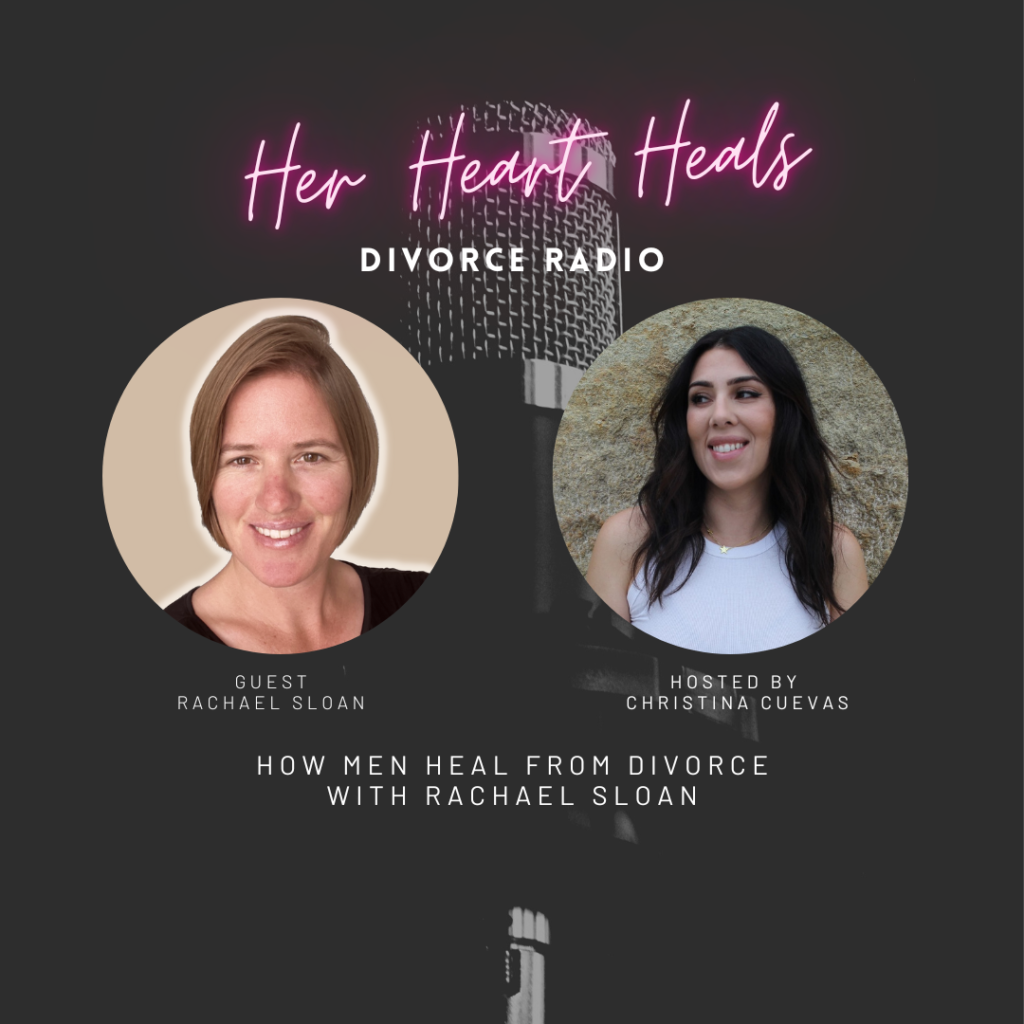
Rachael Sloan is the creator of Better Beyond Divorce, a coaching program that supports divorce men in transforming their lives to get healthy, be happy, and move on with their life after divorce. She is also a Master NLP practitioner and a Certified life coach. Today, Christina and Rachael dive deep into the root causes of trauma that men experience in divorce.
During the conversation, Rachael explains the baggage that men carry during the separation, the stigma of fear they face, how they process their painful emotions, and shares the ways how men can recover from divorce and move forward with their life confidently.
In this episode, you’ll hear:
- Labels that people gave to divorce men
- What are the differences and shifts when working with men and women
- The importance of acknowledging the emotional pain
- How the inability to accept divorce affects the kids
- Uncover and heal the underlying fears; and
- Rachael’s three-step process to self-soothe
Connect and work with Rachael Sloan:
Youtube: Rachael Sloan – Relationship Coach
Email: rachael@rachaelsloancoaching.com
Website: www.rachaelsloancoaching.com
_____________________________________
1-ON-1 DIVORCE HEALING SESSION
>> https://herheartheals.com/privatesessions
SIGN UP FOR THE NEWSLETTER
Connect with and follow Christina on Instagram
Transcription
Christina: Thank you so much for taking the time to come on. I was talking to my boyfriend earlier today and just letting him know how excited I was about our chat, and I was like, we met on BBD by chance in the forum. We offer a lot of similarities, except you cater towards men.
Christina: I was just that it; we just connected and clicked, and here we are, having you on the podcast. I’ve got a bunch of questions. So thank you. First of all, for making time for us.
Rachael: oh yeah. Christina, thank you so much for having me. I think that’s one of my favorite things that I didn’t expect since I started doing this coaching work and specifically with men, is it just seems like I keep randomly meeting so many people in the same or similar fields. Being able to have these conversations is definitely one of my favorite parts. So thank you for having me.
Christina: Yeah. So before we dive in for those that don’t know you, I was hoping you can give us a little bit of an intro.
Christina: Tell us about a little bit about your background and what it is that you do.
Rachael: Yeah. So my main background is as a life coach and an NLP practitioner, I work primarily with divorced men, and I help them recover from honestly the trauma of divorce and move forward with their lives. I help them get unstuck and basically get healthy and get happy and move on with confidence, knowing that they can create a richer future.
Christina: Awesome. And it’s so needed. I was reading your bio and one thing that really struck me into why you were called or why you lean more towards working with men. Was that in your work, you found that they weren’t getting the level of support that they needed through a divorce transition? That actually really touched my heart, and I guess I’m sure you can speak more to why you chose to work with men. I don’t know if there’s a specific scenario or story that kind of ties all that together, but I thought that was awesome.
Rachael: Yeah. Yeah. There, I guess there it happened. I think a lot of things evolve, and this kind of works very organically. I think you used the word how you’re called, there’s things that come up, and for me, I was working with women. I just started in, in very much more like general relationship work. I started to get some men reaching out and wanting coaching, and the very first man I worked with, I was so nervous.
Rachael: It’s so funny looking back. I’m not sure why I was like, I don’t know how to coach men. I only know. I don’t know how their brains work.
Christina: There are different species, still a human brain.
Rachael: I’m teasing. Yeah, the right. Like the first guy I worked with, I was super intimidated by it, and it turned out that his marriage was on the rocks, and he had been through some really rough things in his life.
Rachael: A lot of pretty deep trauma, and he had actually been physically abusive to his wife for about a decade of their 30-year marriage. So here was this guy who had done pretty monstrous things. And that was a long time before I worked with him, and he had already gone through some pretty deep awakenings and processing of his trauma.
Rachael: He was in a place where he was ready for coaching. Some of the work we did was around finding a way to forgive himself and move forward. He just struck me. He was the first client that really just proved. To me, there’s this premise in NLP. One of the first things I learned in my coach training is that says people always have a positive intent, even the most horrible behavior, the most horrible decision.
Rachael: Is born out of a place of positive intent, and he really proved that to me, that even underneath things that are truly atrocious, there is both pain and a part of you that’s trying to escape it, a part of you, that’s trying to protect yourself. So he really opened my eyes to the truth of that statement, that there is good in people and that people are not evil or bad at their core, even if their actions might be really awful.
Rachael: So he was that light bulb for me, and then with that awareness, I started talking to more men, and so many men really are given that label. Especially when relationships go south that they are just bad. That they’re the problem that they’re. I’ve even had men use the word evil and monstrous.
Rachael: Unfortunately, from the stories I hear from my clients and my consultation calls, a lot of men actually hear that directly from their therapists. So that’s the message that they get. That they’re the problem, that they’re the one who’s broken or bad at the core. So that really touched my heart was seeing so many men internalizing that story and really giving up on themselves or on the idea that there was something good in them.
Rachael: So that’s what drew me to working with men was I just saw that they were wrong, that there is good in there, even if they’ve made mistakes or made bad choices.
Christina: Yeah. Yeah. Wow. I can definitely see how that is a total theme with men. I think just all of us walking around, we all kind of start to believe the stories that society can place on us and the labels that society can place on us, and sometimes we just fall into those categories. Like I even in my work, there’s people who are women who identify as divorced. But the term divorced identifying with that. It also puts this like a Scarlet letter on people. Yeah. And it’s really hard to overcome that, and so I’ve really tried to let people know that it’s okay to not identify with something and that we ultimately have the choice to.
Christina: I don’t wanna identify as divorced anymore. In fact, I’m getting ready to work with a financial consultant and have her on the podcast, but even in, as far as legal documents go and things like that, we technically only have to claim that we’re divorced during the period that we’re going through a divorce.
Christina: I just realized how much baggage and weight we all can carry with those labels. Heavy stuff.
Rachael: Yeah. I love that you bring up that identity piece of it because I think, yeah, that’s where so much of the pain is when you identify as this thing as a narcissist, as divorced as a single parent.
Rachael: And then when you identify with that, you take on all of the associations or stigmas or beliefs you have about it. We found one of the most freeing things I can help my clients do is recognize that their identities are impermanent like that. The identities that they put on throughout the day or throughout their lives are really separate from the core of who they are.
Christina: Yeah. Now you have worked with both men and women, and you did bring up your. Reasoning of why you were called to work primarily with men, but what are some of the differences that you’ve had to shift when working with men that you were surprised by?
Rachael: No, that is a great question. So I should preface anything I say right now by just letting you and your listeners know something in the way I communicate my ideas or in my messaging. I tend to attract men who are very analytical. Like a lot of my clients are engineers. A very disproportionate number of my clients are engineers. I have quite a few doctors as well.
Rachael: So I’m hesitant to speak to like men as a whole because I definitely have a kind of narrow demographic within men that seem to be drawn to, to my work. But I would say the first thing that comes up when you ask that question, which is such a good question, is that most clients’ metaphors are really powerful for them.
Rachael: They use metaphors to describe how they’re feeling and what they’re experiencing. And they respond very well when I can give them metaphors. And so that’s actually been a struggle for me because my brain doesn’t work that way so much. So I’ve had to be very intentional about, mostly about listening to how they use a metaphor to describe something they’re going through and try to shift the way I communicate ideas so that it’s almost like it has to become visual. For most of my clients, it’s easier to express what something feels like by giving me that metaphor than describing, say, what’s happening physically in their body.
Christina: Yeah. To just actually come out and say it.
Rachael: Yeah. And it’s been interesting cause at; first, that’s what I thought I was like, are they just avoiding the awareness of what they’re actually feeling?
Rachael: For some of them, but I’ve honestly, I’ve been really impressed by how you can simplify a very complex or powerful topic into a metaphor. Like I asked one of my, one of my first divorced male clients. I asked him one day just what he was, what he was feeling like where he was at right now in his life. He’s like, I feel like I’m on an airplane with my family, and the plane is crashing, and my wife has locked herself in the cockpit, and she won’t let me in. And I knew if I could get in. I could fly the plane, and we would all survive. But if I can’t, and she won’t let me in, the plane is gonna crash, and it’s gonna kill everyone.
Christina: It’s a whole movie scene.
Rachael: I was like, holy smokes. I know exactly how you’re feeling right now.
Christina: yeah.
Rachael: So like he to describe that all to me, he could have given me know,
Rachael: I feel like things are really outta control, and I don’t. I’m worried about how this is gonna impact my kids, but he just gave me that movie clip, and I was like, oh, I get it.
Christina: Yeah. Oh my gosh. It’s actually a lot more simpler because even when you know I’m trying to explain something. You kind have to read between the lines. There’s so many factors, but that’s a hundred percent straightforward.
Rachael: It makes things so simple. I’ve been really admiring this. I’ve recently met a couple of male coaches, and in my conversations with them, that strikes me as well that they are so adept at using metaphor and story to express an idea. And I’m like, oh, Yeah. Men definitely respond to that. That makes sense to my clients. It’s interesting, but it’s new it’s for me. It’s like shifting gears.
Rachael: I’m like, okay, brain, let’s get creative.
Christina: Yeah. Oh my gosh. I will have to chat after this, but it totally reminded me of BBD and around what James is talking about and using a bunch of metaphors, and I’m like, oh, it must be a guy thing.
Rachael: Yeah. I told when James talks, I’m like, oh yeah, my clients would love the way you teach. So many things in BBD. I’m like, I need to use this in my training videos for my clients because he speaks in a way that would definitely speak to the men I work with.
Christina: Yeah. Yeah. My brain just lit up. I’m like, oh, that’s where it comes.
Rachael: The other big thing, though, that I’ve noticed with men is that at least the men I’m working with a big difference between them and the women I’ve worked with.
Rachael: That they tend to be okay. There’s a lot of things coming up for me now as I’m like shifting gears in this question. One is that they tend to be more fearful of their emotions, that they’re afraid. If they let themselves feel it will take over, particularly with anger and grief. And for a lot of them, I see that they resist those emotions so strongly that they make themselves depressed.
Rachael: Which is interesting, cause like depression is almost like a safety zone for some of them because they are not feeling in that place. It’s helpless, and it’s powerless, and it’s stuck, but it’s not as intense as if they’d have to move through the pain. So that’s been interesting. A lot of what I do with my clients is trying to help them understand what emotions are and take that fear of feeling away because so many of them, like I had a consultation with one guy who was just, he was like, no, I’m terrified. He’s I can’t let myself go there. I didn’t know what it’ll do to me, and we started talking about emotions as just physical sensations. Like you feel it in your body.
Rachael: And I said, have you ever broken a bone? And he was like, oh, I’m into extreme sports, and I’ve actually broken 71 bones. Like this guy, he was a young guy too. He was like in his twenties. And he spent so much time in the hospital and in casts and doing these extreme sports, and yet he was so terrified of emotional pain.
Rachael: And so I found for men helping them connect to the physical quality of emotions is really transformative because most of them are pretty comfortable with physical pain, but they don’t. They don’t realize until we start exploring it that their emotions are also just physical pain.
Christina: Yeah. I was just about to say, is that so much of feeling is physical, and so is it this aha moment when they realize when they make that connection?
Rachael: That’s an interesting question. Yes and no, for a lot of them, it’s fascinating on the surface. But I don’t know if you’ve found this in your work, Christina, that there’s such a gap between what I understand logically and what I feel emotionally. So it helps to understand, but then it’s, I found I really have to go with them and help them experience that.
Rachael: For them to get that kind of aha moment of, oh yeah, I can move through this. Like they have to actually do it and come out the other side, and then they have to do it a few more times and then do it once on their own, and now they believe it cuz like their rational brain is yes, I get this. It totally makes sense.
Rachael: And then they’re like the emotional brain is I’m still really scared of this. I don’t think we’ll do it.
Christina: Yeah. Yeah. I think that’s definitely all humans to a certain extent, right? Push and suppress emotions deep down, and it really takes a lot of trauma-informed healing and work and things like that to be able to bring those deep layers to the surface and allow us to actually heal that. And. Yeah, I relate so much.
Rachael: What is cool is that once they do that, once they feel it, then it’s an aha moment. I did just have a client the other day. He was so cute cause he was so excited.
Rachael: He was like, he’s it’s this whole other world, and he’s like, why didn’t anyone tell me about this? And this was a fellow who was actually in the process of reconciling with his wife. They filed for divorce, and then they were trying to come back together. So his understanding and experience of emotion was so freeing for him, and then he’s looking at her emotions and understanding them that way.
Rachael: He’s like, I feel like I have this like superpower to see what’s actually going on underneath. He’s it’s like this whole other like a world that’s happening below the surface that he’s nobody told me was there. How did I not know this?
Rachael: So there is that piece of it that can be cool too.
Christina: That’s awesome. It’s really cool that I’m sure it’s really cool to be able to be a part of those moments and where they’re I’m feeling and then when they’re able to then use that work and. Take that and bring that into their relationships, not just with themselves, but with other people.
Christina: It’s a whole new world.
Rachael: Yeah. It’s I think that piece right is what’s so cool is the biggest discovery for me. I think personally in coaching and then that I see reaffirmed over and over with my clients is that building that relationship with yourself and building it with other people is exactly the same.
Rachael: So once you experience what it’s like to do. One is you get all these little AHAs with other people in your life, but I know you probably have some other questions, Christina, but that one of the differences with men and women, it’s been so interesting to me cause the thing that surprised me the most was that I have been shocked at how committed the men I work with are not just to their wives, but to their children. They have like totally upended all of my personal stereotypes about men and divorce.
Rachael: So many of them, the reason they can’t let go is that they really don’t believe that being divorced is the best thing for their kids, and they cannot comprehend how she could choose it if it’s not the best thing for their kids. That’s been really touching, and I feel there’s my own lifetime of biases coming in that I say is surprising to me, but I have been really touched by how deeply so many of these men not only love but are committed to sacrificing really everything if need be to do what they think is right for their kids.
Christina: Yeah, no, that’s super sweet to hear and so awesome to hear how committed your clients are, and the one question actually that I had was when you always hear a lot of, at least from my perspective and in my work. Working with women who ultimately made the decision to get a divorce so that their children can see what happy parents look like.
Christina: So do you find that in with your clients? They’re ultimately able to understand that both can exist, that a great, loving, and healthy relationship with their children can exist at the same time as they’re rediscovering and figuring out this new life.
Rachael: Yeah. It’s a big identity shift for a lot of my clients because, for so many of them, that identity is husband and father. It is really tragic because, for a lot of them, that identity was very central to their sense of self, but they weren’t fully aware of how central until it was gone.
Rachael: So I do find that when they can come back and start to build that identity and that sense of self outside of their marriage, That’s yes, absolutely. I would say that’s one of the toughest mindsets or beliefs to push past, especially for my clients, and again, this might be because I do attract these very analytical engineer brain guys, but they’ll come to me, and they’ll be like, look like, I know that holding onto this belief that a nuclear family is the best thing for kids is not helping me.
Rachael: Like they can see that they can see how it’s stopping them from being fully present when they are with their kids. Like they see the damage it’s doing in their lives and in their kids’ lives. But then they’re like, yeah, but look at all this research, and I’ve been spending all this time Googling and, studies show that kids in these homes have these outcomes and kids in these, single family homes and divorced parent.
Rachael: They tend to seek so much data around what’s best for their children, and I find that can be really one of the hardest things to overcome because it gets caught, tied up with this really deep sense of injustice. So I guess I should probably say this mostly cause I didn’t know this until I started doing this work.
Rachael: Almost all of my clients didn’t choose the divorce, and in America right now, 70 to 80% of divorces are filed by women. So that’s a pretty common experience for men in divorce that they didn’t choose it. So that outcome for their kids gets really tied up in this injustice that they weren’t given a voice or given part of a choice in what happens.
Rachael: Those two things together, I find, can be some of the most difficult beliefs to make peace with or set aside as they move forward. But I do find that they get there, and one of the perspectives that have really helped me and a lot of my clients is to separate out correlation and causation, right?
Rachael: Like when it comes to all of the research that says kids who grow up with divorced parents are X times more likely to do poorly in school or not get into college or do drugs later in life. Whatever the statistic is, most people jump to while it is because the parents are divorced.
Rachael: But there’s so many things between parents getting divorced and those outcomes and is it because so many divorced parents end up in these nasty custody battles where one parent doesn’t accept the divorce and fights and fights, and now all of their energy and money and time. So when I start describing it like that, a lot of my clients can see that happening in their lives.
Rachael: That their inability to let go is affecting their kids. It is affecting how they show up in parents. Like their lack of happiness is harming their kids. So that sometimes helps them make that shift from the divorce is the problem to the way I allow the divorce to affect me is what’s actually impacting my kids.
Rachael: That one is hard when they word injustice and what’s best for my kid. I’m like, okay, we gotta settle in for a little while cause we’re gonna be here.
Christina: Yeah, totally. No. And actually, this was one of the first questions that I wanted to ask you. So it actually ties in beautifully because when you come with those core beliefs and these really tough things that people are holding onto, especially when layered with statistics and things like that, how do you start? How do you begin? Just peel back the layers, and I guess my question in a simpler form is how do men really approach healing?
Christina: I know you had said that your first client who had approached you had already done a lot of this trauma-informed work. He was ready to do a deeper dive, but when you have somebody who hasn’t really gone there yet, and they come to you with these really strong beliefs. Where do you start?
Rachael: Yeah. So the reason I think a lot of them are stuck is because they’re fighting with themselves, and they’re either fighting with themselves, or they’re fighting with reality, or both. They can’t accept what happened or what’s happening, and they can’t accept it. It’s interesting because at the same time that they have the injustice, and they can’t accept her choice.
Rachael: Most of them also have a deep sense of guilt or blame or responsibility. Like they see very clearly their role and what they did wrong, but now like their injustice with the feeling of injustice towards her isn’t that she didn’t want that relationship anymore. It’s usually that by the time he saw it, she wasn’t willing or able to allow him to try to fix it.
Rachael: Because he saw it too late, and that’s where that injustice is. As I see clearly where I was wrong, and now I wanna make it right, but I can’t cause it’s already over. So a lot of them get stuck in either these really rigid beliefs that are not letting them accept what happened. This is not the best thing for the kids, but it is what’s happening.
Rachael: Or they’re stuck in that self-judgment, that fighting with kind of themselves or their past. So where I always start is by, and it’s counterintuitive cuz so much of coaching is helping people see other perspectives and shift beliefs. But I find that we have to start by embracing what they already believe because arguing just creates more argument.
Rachael: So the way I have found that’s the most effective to do that for most of them that I work with is to help them discover the underlying fear. Whatever it is that they’re holding onto, I don’t really care what that belief is. And we’re not gonna try to change it instead. We’re gonna explore why it’s so important to believe that, and if you gave up that belief, what is at stake? What would you be losing? That helps us get to what the real problem is because the problem isn’t that they, one of these rigid beliefs, they hold that this wasn’t right or that no one will want a single dad. Who’s 55 who was married for 30 years?
Rachael: The real problem is always much simpler. It’s I’m afraid I’m gonna be alone. I’m afraid I’m not worthy of love. I’m afraid my children aren’t gonna be okay. It really drills down to these very simple primal fears that we all have. So that’s where I. Start. If I have a client, who’s really stuck in something really rigid.
Rachael: That’s telling me that belief is really important to them. And I give my clients one of the first things we do is I give them this model of self. That’s just pretty simple. It’s just a three-part model of self that we all have a healthy self, a survival self, and a wounded self. And if someone’s holding on to a really rigid belief, it means that their survival self is fighting really hard.
Rachael: And the survival self is our fight or flight response. It’s the part of our brain that’s trying to keep us safe. And that means that there’s a threat of some sort that they perceive. So we can’t argue with the methods, right? Like the survival self like rigid beliefs or how it thinks it’s protecting you.
Rachael: And so I can’t argue with the how of the protection if I’m denying that there’s actually a. So once we find the fear, we figure out what is that danger. What is it that holding onto this belief is doing for you? Then we can see, is that belief actually helping you achieve that goal?
Rachael: Is it protecting you from that feared state, and are there better ways, right? And then it just becomes about strategy because you have this fear or you have this problem, your brain thinks we should solve it this way. Is that working? Is there a better way to solve it? Is there something more effective?
Rachael: For these like very, analytical, logical-minded men that tend to wanna work with me, they love that because now it all just makes sense. It’s about strategy, and it’s not so much about that kind of emotional belief. So it’s a long answer.
Christina: No, I absolutely love that. And I’m like, okay, is she reading my mind?
Christina: Does she have my, see my notes over here with all my questions? Because literally, my next question was, what are some of the techniques that clients first learn with you? I know we had talked about learning basic emotion and learning how to feel that in the body, and now it’s giving them sort of these core places where they can compartmentalize and strategize these beliefs and create new and healthier choices and things like that.
Christina: My page is going in the right direction. Completely filled with notes. Yeah, absolutely. With that, I wanted to ask, what are some of your clients’ favorite ways to self-soothe after they have learned some of these essential techniques and really started to go out into the world now with these new strategies? What are some of their favorite ways to soothe?
Rachael: Oh gosh, that might be different for every client. I have. I’m thinking a couple popping to mind right now. Honestly, Christina, I would say pretty much there’s a lot of different, great techniques and tools out there as pretty much everything I do or teach my clients comes down to one of three things.
Rachael: The other thing that I do early on in my program is I just package this system, this process, like these three steps. And any tool, anything we pull from, I just bring back this is we’re always doing one of these three steps. We’re really never doing anything else. And there’s a lot of ways to do it, and it’s up for them to decide.
Rachael: Which way feels right for them? But the basic steps are they’re either recognizing and allowing what’s happening, whether that’s a thought or a feeling or a reaction whatever’s happening internally, they’re either recognizing and allowing it, they’re seeking to understand it. That would be getting to that core fear or trying to understand where a thought came from or how I learned to believe.
Rachael: The third step is my favorite is, remember who you are. That’s just starting to connect to a sense of yourself as the witness of all of this experience, that these thoughts are happening. These feelings are happening, and I’m here, and I’m not the thought because I’m listening to the thought, and I’m not the feeling because I’m feeling the feeling.
Rachael: Okay. So if I’m not the thought and I’m not the feeling, then what am I would say of the core of everything we do comes down to helping them have an experience of themselves that is separate from thought and emotion and identity in all of the story of their lives. And so we do that in different ways and.
Rachael: Different clients have different ways of connecting. I think we all have a preferred modality, right? If we learn more easily, when we see something or when we hear something or when we do it ourselves, right? There’s all different learning styles. So there’s a lot of different ways into that experience, but that’s, I would say what my clients of all learn to come back to is finding that part of themselves that is witnessing everything that’s happening both inside and outside of them, so that there’s a little place of stillness.
Rachael: Yeah, that’s honestly like it’s one of those things that if I try to describe it to a client, they’re like, I have no idea what you’re talking about. And then, if we do it so far, I haven’t ever met anyone who couldn’t connect to that feeling if you can help them slow down all of the noise enough.
Christina: Absolutely. No. These three steps. Absolutely powerful. Thank you for sharing that with me.
Rachael: Yeah. Oh, you’re welcome. There’s just so much out there, and my big challenge is I can geek out on like all the different tools and strategies and approaches, but I’m realizing for my clients, especially coming in these states of emotional overwhelm, it has to get, I have to simplify it.
Rachael: Yeah. And I told you metaphors are hard for me. So I’m working on that piece. But of those three steps really come from? I was like, I need to drill down. Like I can’t just teach them all of these tools in all of these ways and hope that they’re gonna like remember it. Yeah, I need to find a way to just really what are we actually doing to just simplify it.
Rachael: That’s been cool for me to see because I’m starting to realize that’s what everyone is doing across all these different ways of doing this work.
Christina: Yeah. It’s so true. I was just even thinking to the work that I do, and I really try to bring building an emotional toolkit, and whether that’s women who connect via journaling, meditation, exercise, being out in nature, breathwork all of these different modalities that ultimately lead us all back to stillness and your three steps are so simplified. Just so powerful, so special that it’s I can see how your clients are just able to go there and get what they need and not have to do all of these other activities in order to get there.
Rachael: I would say, as you said, the difference is that emotional toolkit. I love that idea. I have a couple clients who journal religiously. So I know that helps them. A lot of my clients totally outside of the work with me, and maybe this is a man piece versus women. I’m not sure a lot of them use the exercise. I would say before they learn any emotional work with me.
Rachael: Well, over half, maybe 70% of the men that I talk to have turned to exercise as their main way to self-soothe, which has been interesting.
Christina: So needed but even in my work and when I get approached by people who ask me for advice, or they just feel really overwhelmed. I pretty much always one of my first questions is when was the last time you moved your body when was the last time you sweat?
Rachael: Yeah. Which times and the other big one, is that is breathing, like you said, that’s so powerful. And then exercise brings you into needing to become aware of breath. Totally. Yeah. There’s so many ways, but they definitely, I think, are all doing the same thing.
Rachael: I think my favorite way I don’t know if my should ask them. I don’t know if my clients like it as much as I do, but there’s an exercise called the horror line. I don’t know if that’s when you’ve heard about it’s from energy work. I don’t know who originally came up with it, but you basically just imagine a little ball at your root, where your, I guess your root chakra would be.
Rachael: Then you drop a line from there, down through the center of the earth, and then you extend it up to a little ball in your heart and then to a little one above your head, and then you straighten it out. Like you look for any kinks or twists or crookedness in it, and I found that. Has been a really cool tool if I guide people to anchoring that, to that sense of themselves as the observer, like to that still state, cuz now they have this thing they can imagine.
Rachael: We just say, okay, and allow that to be an anchor for the part of you that’s watching, and then they can feel their connection to that imaginary line, and they can also notice the sensation in their body. So it gives them something tangible to have that dual, like being aware of the observer and aware of the observation.
Christina: Yeah.
Rachael: So that’s my maybe personal favorite that I use. I would say the most for self-soothing. But I should ask. I should do a little survey. I don’t know. I teach it. I don’t know how much they use it.
Christina: No, I love that one. I didn’t know that it was called that, but I always just, I learned it long, long time ago, and it always just helps me feel so much more grounded, and I’m like, now you just triggered my memory, and I’m absolutely after we got off this call, I’m going to hop out put my feet to the earth and go and imagine my, imagine that line going down to the center of the earth. So thanks for the reminder.
Rachael: Yeah, anytime. Christina, what I mean, I, you do so much in deep work, right? With the trauma piece. Do you have a go-to emotional exercise that you like?
Christina: My first one, to be honest, gotta go with your clients.
Christina: As far as the exercise. Now I have a tendency, though, to where exercise brings me into my body and helps me release a lot of stored energy, but I have noticed it. It’s my favorite, but it’s also a distraction from my emotions. I notice, at least for me, it’s really hard to cry. It’s really hard to have a lot of emotional releases.
Christina: And so the work that I resist, which it’s not my favorite, but it is part of what I teach, and just kind helping others discover breath work and being able to guide people in that, and I resist it so much. The reason why I offer it as something that’s guided is that it’s not something that I will probably ever really do on my own.
Christina: I can only participate if I’m being guided by someone else because it takes me there. It takes me to those really deep emotions, and I have to face them, but yeah. Yeah. My favorite exercise is sweating.
Rachael: Yeah. I love the way you describe it because exercise can be such a release. But it is; also, I do see a lot of my clients when we first start working together. They’re using it in a pretty extreme way as very much a distraction. It can be both. I love what you just said, too, about doing breath work with a guide. Are you familiar with Susan Johnson? She’s the therapist who created emotionally focused therapy.
Christina: No.
Rachael: She spent like 30 years doing attachment science research, like all of the different attachment styles and stuff came from her body of work. But she talks a lot about how powerful it is to go with someone into places that are painful or frightening. Like she gives a beautiful example just of two children standing outside a dark forest.
Rachael: The one kid is, let’s go into the forest, and the other, one’s no, I’m scared, and the first kid says I’ll hold your hand and we’ll go in together. Now we’re brave enough to go. What a fundamental could foundational human experience it is to feel safer facing something that we perceive as dangerous with another person, with someone we trust.
Rachael: I think that’s so important to any of this emotional work is recognizing. Where someone’s window of tolerance is for going into their emotions, so when you’re guiding them, cause some of what I do is with my clients, but then I also give them things to do on their own to explore their emotions.
Rachael: But I find it’s so important to be cognizant of where they can go safely on their own and where they need that support of someone going with them. Cause we all need that.
Christina: Yeah. Yeah. It’s so true, and being able to be held, and someone holding space for me is so humbling also as well, because especially when you’re dealing with a lot of these core fears, who am I, or I don’t wanna end up alone.
Christina: A lot of those things ultimately come from being by yourself or doing things, feeling lonely. So having someone hold space in time in the world where it’s not easy to trust other people, we feel just we all have this shield and this bubble. It really just brings back that human connection.
Christina: We realize how much we need that, and we need that support to be able to lean on each other. It’s just a really beautiful experience.
Rachael: It’s humbling on both sides, right? Because I agree. I just, I had a really cool session with a coach last week, and it was such a humbling experience to have her hold that for me and also to be allowed to hold it for someone else.
Rachael: For someone to trust you. Yeah. With holding that space for them and that’s. I think that’s been one of the most powerful gifts I’ve received from my clients sometimes. I’m just in awe of how willing they are to trust me when they’ve been so badly hurt by someone that they trusted so deeply.
Rachael: That’s been so touching to me because I think it speaks to both the resilience and the desire that even. When we’re afraid or we’ve been hurt, or we feel like we can never trust again, like I, I have men saying, I just dunno how I can ever trust again, in the very moment where they are trusting me with these incredibly deep and frightening things.
Rachael: It’s so inspiring to me. I feel so much hope for people both individually and as a whole, even given the wildness of the world right now. Because I see that in people that we want that connection we want to trust, and we want that emotional safety and security. So I love being able to see that.
Rachael: And it’s, I just think it’s such a privilege to get to experience that all the time in my work. I feel like for me. It’s been such a gift to break down some of my own walls. Yeah. Because I get to see it all the time, that’s what’s underneath everything else.
Christina: Yeah, absolutely. I agree. Even do you ever find yourself going back to your example about in the grocery store?
Christina: Like when you see someone else, that are you ever just oh my gosh, that person just really needs a hug or, you wanna reach out, you realize okay, I’m not. In my workspace element here where people aren’t just out being open, and you’re just so filled with compassion, and you wanna connect, and you’re like, oh gotta tone it down a little bit.
Rachael: Yeah. I think my big inner journey at the moment is about it is all just about acceptance, right? But it’s about letting go of the need to control, and for me, often, the need to control takes the form of needing to fix things for people. So that’s been interesting. I definitely noticed what you just described.
Rachael: Like I wanna help you, and I wanna make you feel better. The space that I’m really trying to embrace myself right now is really trusting that people can get where they need to be and that I don’t have to do it for them. Yeah. Cause I am very guilty of that in my coaching practice, too, I remember.
Rachael: My first coach trainer was like, you should never be working harder than your client in the session. If you are, you’re not serving them. They need to own this process and this experience when I do it when I really trust that they have the resources they need, that they have the wisdom that they need.
Rachael: And that my role is really to hold space and be a guide to allow them to find that. I am always so astounded by where they end up. They always take themselves somewhere way cooler than where I would go if I was trying to steer the process or the coaching. So I think that’s like my current big lesson to really fully embrace is that I can let go and let people find their way, right?
Rachael: I can be supportive. I can hold space. I can teach some of these ideas. But ultimately, they’re the ones that have what they need, and it’s accessing that voice, that healthy self, that’s gonna get them where they need to go.
Rachael: I’ve been experimenting with what does it feel like to have them, that faith in even the people in the grocery store that they have that part of themselves, even if they’re not accessing it in that moment. Yeah.
Christina: Oh my gosh. I love that. Definitely, I’m not always using that, Christina. No, I love just that perspective and being able to say, okay, I’m gonna trust that, they’re on their journey. Just like I’m on mine. That it’ll all come, and those who seek will find.
Christina: Sometimes you just gotta. Let them be seekers.
Rachael: Yeah. I love that. That’s such a simple way to say it. If you seek, you will find, and that’s something, when, if I try to manage it too much for a client like I’m taking that away from them. I’m not allowing them to be seeking. I’m trying to show them where it is.
Rachael: It’s never gonna be the right experience for them in the way that they need it to be.
Christina: Yeah, totally.
Rachael: It’s hard to do in personal relationships. I’m much better out with my clients than with my husband.
Christina: Yeah, all around for me, I want so badly to provide healing and comfort and answers and solutions, and no, just like you, it’s part of the process.
Christina: I think I learn just as much working with clients as I do even in my own coaching experiences or seeking out other coaches or healers or things like that in teachers. So it’s a two-way street for sure. I get it.
Rachael: Do you ever find that sometimes when you’re struggling with something yourself that it’s like every coaching session you have is like giving you like each one is oh, that’s exactly the insight that I needed.
Rachael: Yeah, I think when I look back and when I reflect, probably not at the moment. I’m not good at realizing things for myself at the moment, but it’s almost like after when I’m processing and just releasing those emotions and detaching, I find the little nuggets in there of wisdom where I’m like, oh yeah, that’s what you meant universe.
Christina: You’re like, oh yes. Thank you for that message. That’s timely for me.
Rachael: Totally. Sometimes I’m like, oh, I feel like I got the coaching today from where they got to.
Christina: Oh my gosh. So much. Yeah. And that’s where I’ve saying it’s definitely a two-way street. It may not be the same.
Christina: What I’m teaching someone else is it definitely comes in like more of the smaller phrases or maybe the feedback that I get. Those are like those subliminal messages that I when I go back, and I reflect, and I’m like, oh yeah, that was meant for me to hear for sure.
Rachael: Yeah. I needed that. Thank you.
Christina: Yeah. Rachel, thank you so much for taking the time and connecting with me and sharing so much about your practice. I learned so much. Like I said before, my notebook is filled with notes. I have so many nuggets of wisdom. How can people find you? What programs are you offering right now? Are there spaces for people to work with you?
Rachael: Yeah, let’s get it out there. All that good stuff. So let’s see, the program I’m offering right now is better beyond divorce, and it’s a six-month group coaching program. I say group tentatively because it really is. An internal journey with a lot of support through both one-on-one coaching group, coaching community, and one-on-one communication with me.
Rachael: So it’s this guided dive into all of the things we were just talking about because, I think as you and I discussed a lot, Christina, that so much of this has to be felt, it has to be your internal experience of moving through what you need. So better beyond divorce is a program for men that’s structured to take them on that journey.
Rachael: And then I guide and support them in that exploration. I do have space in that program. It is growing and evolving. So I think there will continue to be space there for some time. I am no longer doing one-on-one coaching outside that program, but I do have an option for clients that are within that to do more intense one-on-one work as an add-on to that inner journey within better, beyond worse.
Rachael: The best way if someone wants to reach out to do a consultation call or just ask me questions is to email me. My email is rachaelsloan@coaching.com. I also have a website it’s www.rachelsloancoaching.com, and there’s a contact form on there and a little bit more information, and then if people are just like talking about this stuff or listening to it, my YouTube channel is probably the best place for them to go and you can find me pretty easily on YouTube just by searching my name.
Christina: Awesome. And I will be sure I put all of those links in the show notes as well. So for anybody listening, just move on over to the show notes, and you guys could see those links there. But again, oh my gosh, this was awesome.
Christina: Thank you.
Rachael: Yeah. Thank you, Christina. This was great. Fun. Thank you so much for having me on.



Leave a Reply